


Why One Small Step Can Become a Big Barrier: The Hidden Hazards Around Your Home
Fri, July 10th, 2026
When most people think about preventing falls, they picture a staircase or a slippery bathroom floor. While those areas certainly deserve attention, some of the biggest hazards in a home are much smaller and often overlooked.
A one-inch threshold, a raised sliding door track, or a single step into the garage may not seem like much. But for someone with reduced balance, arthritis, limited mobility, or who uses a walker or wheelchair, these small obstacles can become major barriers to independence and safety.
The good news is that many of these hazards can be identified and addressed before they lead to a fall or injury.
Why Small Changes Matter
As we age, our ability to step over obstacles, recover our balance, and react quickly naturally changes. Medical conditions, joint pain, vision changes, and muscle weakness can make navigating everyday spaces more challenging than they once were.
What feels like a minor step to one person can become a daily obstacle for another.
Many falls don't happen because someone is climbing a ladder or rushing down a staircase. They happen during ordinary activities like:
- Walking from the garage into the house
- Stepping through a sliding glass door
- Carrying groceries inside
- Taking out the trash
- Moving between rooms
- Entering or leaving the shower
These are activities we perform every day and often without giving them much thought.
Common Hidden Barriers Around the Home
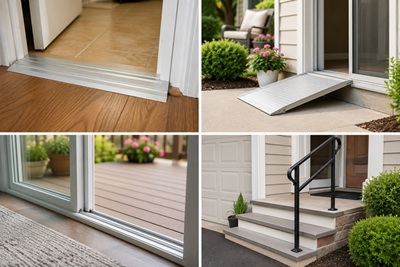
Door Thresholds
Every doorway has some type of transition between rooms or between the inside and outside of the home. Over time, these thresholds become easy to ignore.
However, they can catch:
- Shoes
- Walkers
- Canes
- Wheelchair wheels
- Rollators
Even a small change in floor height can cause someone to lose their balance.
Sliding Glass Door Tracks
Sliding doors often have raised tracks that require lifting your feet a little higher than usual.
If someone shuffles their feet or has limited hip or knee movement, these tracks become a tripping hazard.
This is especially true when carrying food, drinks, or laundry while looking ahead instead of down.
Garage Entry Steps
Many homes have one or two steps between the garage and the kitchen. This area deserves extra attention because people often enter while carrying:
- Groceries
- Laundry baskets
- Packages
- Pet supplies
- Gardening equipment
With your hands full, it's much harder to use a handrail or catch yourself if you stumble.
Decks, Patios, and Backyard Entrances
Many homes throughout Southern Delaware feature decks, patios, and outdoor living spaces that are enjoyed year-round. Even a small threshold or step between your home and these areas can become a tripping hazard.
Rain, morning dew, wet leaves, or winter snow and ice can make outdoor surfaces slippery, increasing the risk of a fall. Whether you're heading out to enjoy your deck, tending to the garden, grilling with family, or simply taking the dog outside, safe transitions between indoor and outdoor spaces are important for maintaining independence.
Who Is Most at Risk?
These small barriers can affect anyone, but they're especially important for people who:
- Have experienced a previous fall
- Have arthritis or joint pain
- Use a cane, walker, or wheelchair
- Have had knee or hip replacement surgery
- Experience dizziness or balance problems
- Have reduced vision
- Have numbness in their feet due to diabetes or neuropathy
Family members often notice these struggles before the person living in the home recognizes them.
Solutions That Can Make a Big Difference
The good news is that improving safety doesn't always require a major remodel. Depending on your home's layout, simple solutions may include:
- Low-profile threshold ramps
- Transition ramps for wheelchairs or walkers
- Additional handrails
- Better lighting near entrances
- Slip-resistant flooring
- Removing unnecessary obstacles around entryways
The right solution depends on the individual's mobility needs and the specific challenges within the home.
Think Beyond the Bathroom
Bathrooms receive a lot of attention when discussing fall prevention and for good reason but safety should be considered throughout the entire home.
Every room presents opportunities to improve accessibility and reduce fall risks.
Taking a whole-home approach can help create a safer environment that supports independence for years to come.
Prevention Is Easier Than Recovery
Unfortunately, many home modifications happen only after someone has already fallen.
A fall can result in:
- Broken bones
- Hospital stays
- Surgery
- Loss of confidence
- Reduced independence
Making proactive improvements before an accident occurs can help reduce these risks while allowing people to continue enjoying the comfort of their own home.
Let Bell House Medical Help
Every home is different, and every person's mobility needs are unique.
Whether you're planning ahead, recovering from surgery, or helping a loved one age safely at home, Bell House Medical proudly serves homeowners throughout Southern Delaware, helping them find accessibility solutions that fit their lifestyle and home.
From threshold ramps and grab bars to stair lifts, wheelchair ramps, and other mobility solutions, our team is committed to helping you create a safer, more accessible living environment.
Because sometimes it's the smallest step that makes the biggest difference. Give us a call today or visit our showroom in Lewes on Coastal Highway.